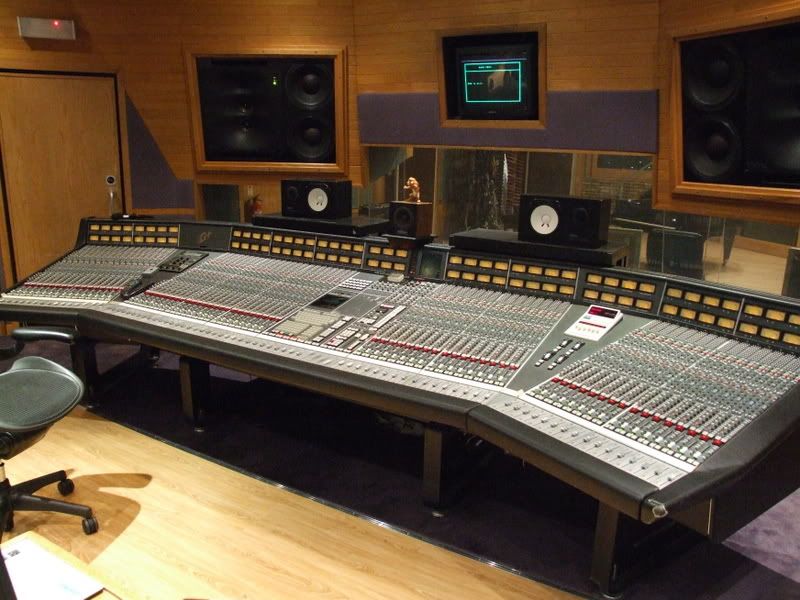
So I just picked up one of these new Telefunken M80 mics from my friend Michael Block over at the Church Studios here in Tulsa. When we did some records earlier this summer and we ordered ten or so M80s to record a horn section as well as some drums. When we first hooked them up we were all looking around saying to ourselves, I bet it just sounds like a fancy SM57. Truth of the matter is, it sounded absolutely incredible. On everything we tried! Later we used the mics on drums, guitar amps, vocalists male and female, upright bass, Leslie speakers, whatever we could find, and every time it passed the test. It was only a matter of time before I picked up one or two for myself.
This mic is only $250 US, which is impressive for the quality of Transformer that is in this mic. According to our friends at Telefunken, the transformer is about $100. If you know anything about components, you may know that $100 for a transformer is starting to get pretty pricey, which means it's of very high quality! A similar transformer is available from TAB-Funkenwerk for about $90 that you can buy from Mercenary Audio to put in your SM57 as a mod. I believe you can also buy an SM57 with it pre-fitted with the transformer for something like $200 or $225, and I believe it would probably sound decently similar, but probably not as good.
The Telefunken M80 has a crisp, clear, accurate sound to it. Very tight low end, quick response to transients, and wonderful clarity in the mids and highs. Because of this, it's great for most sources I find myself recording! Drums, absolutely! Vocals, guitars, speaker cabs of any kind, completely! Now, it doesn't do too well where a condenser might usually shine (acoustic guitar, drum overheads, strings) but rightfully so, it's a dynamic mic that has a limited amount of sensitivity. For some that keep their guitar amps a bit brighter, the M80 might be a bit TOO bright. Consider really though that the top end on the M80 is probably much more accurate than the top end of an SM57. You know how you usually have to add just a touch of 10k or 12k to the top end of a 57 when you use it on snare drum? You don't have to do that with the M80!
Another thing that blew us away up at the studio was the rejection on these mics. The pattern is cardioid but it's extremely tight, and that makes studio recording easier for the engineer! The SM57 has a fairly standard cardioid pattern, so you often will get problems with hi-hat bleed into the mic, especially when you have to boost that 10k later on. The M80's pattern is so tight that you can place it on a vocalist standing in front of their amp, and you can hardly hear the amp. It's for this reason that I am nearly considering the M80 one of the best close mics of all time.
In the studio, we've got a large live room, something like 65x45x35, so a lot of times when we do bands, we do them completely live, everyone in the room at once, facing in a circle like they would at band practice. Since it's such a big room, they have plenty of room to spread out and have their amps and pedals set up in front of them. Usually that means their mic stands for vocals are in front of them, and this creates some problems. You've got direct sound from their amps and their vocals, but you've got reflected sound from the entire room, all around the floor, and when you've got guys in the room playing loudly, it's usually impossible to control bleed. The M80 changes that! Using them when tracking life in the studio, we had our jaws dropped when realizing how little bleed was in the tracks.
The price is a mere $250, and it rivals mics up in the $1000 range for sources usually requiring a hefty workhorse condenser like a 414 or even a nicer dynamic like an EV RE20 or MD421. Seriously. Before you get yourself three MD421s for toms, I'd consider these M80s. To me, they outperform the SM7 on vocals in a many cases, and that's hard to do! I don't mean to say that the RE20 and the MD21 are not useful, because they are both fantastic mics and they work very well, but for a different flavor similar to a condenser, try the M80. To me, they are like Telefunken's answer to the 57, and I must say they did a bang up job.
Friday, September 24, 2010
Wednesday, September 1, 2010
Various thoughts on Guitar Amps
Before you reach for the amp sims and PODS and all other sorts of similar gear, I will ask you to lend me your ears and take some time to think about the following thoughts.
When you walk into a professional facility, one of the things you will probably notice is a myriad of incredible gear. This fact goes unchanged when noticing their musical gear. Studios often have stacks of vintage amps, incredible guitars and basses, pianos and organs of all varieties, drumsets and snares collected over the years, and pedals strewn about. Why? Why is this stuff so important? I will tell you why. It ALL starts with the source.
As musicians get better, they usually (not always) but usually strive for better and better tone--especially the more they learn about the recording world. And yes, there is such a thing as "good tone." We're not just random particles floating in a microcosm where nothing exists and everything is just a subjective matter--if that's what you believe, then please continue--but what I sardonically allude to is this: in every genre there is good tone. Metal, folk, orchestral, rock, indie, pop, there is all "good tone." Tone that is pleasing to the ears, pleasing to audiophiles and consumers alike. Tone that is a staple. A Signature. A voice! You want your voice to sound good.
So that's where this stuff starts to come in. The guitars. The pedals. The amps and cabs and speakers. That stuff happens ALL before it hits the mic and preamp and converter. So before you start jumping over the digital bandwagon and getting amazing recording gear, take a look at your setup. Don't lie to yourself. Look at what you have and really do your homework. In professional situations, here are some common examples:
Drums - (Vintage) Slingerland, Ludwig, Rogers, Pearl (New) Custom drums, DW, Pearl, some others.
Guitars - American Made Fenders, Gibsons, PRS, custom guitars
Basses - American made Fenders, Laklands, Warwick, custom basses
Pianos - Steinway D, Yamaha C7, Fender Rhodes, etc.
Amps - Vintage Marshall and Fender, Vintage Silvertone, Danelectro, Reeves, etc. new Orange, Top Hat, Hiwatt, Matchless, Bad Cat, boutique brands
Pedals - Lovepedal, Xotic, Robert Keeley, Boss, ZVex
Why bother mentioning these? The point is to show you that most of the commonly used amps and instruments are all very good. Expensive, yes. Worth it? Of course! People make all sorts of excuses these days in home or project studio situations. "I can't be loud," or "I don't need to spend that much, I don't play live," blah blah blah. They say their guitar tone or drum tone suffers, yet they say they use XX instrument or XX amp and it's completely sub-par, and they lack the knowledge and fail to do research enough to realize that people just don't use that.
Often a factor that leads guitarists to get better tone is to look at what their favorite guitarists are using in professional bands. This will help them see what the pros use!
Think about tone. More soon.
When you walk into a professional facility, one of the things you will probably notice is a myriad of incredible gear. This fact goes unchanged when noticing their musical gear. Studios often have stacks of vintage amps, incredible guitars and basses, pianos and organs of all varieties, drumsets and snares collected over the years, and pedals strewn about. Why? Why is this stuff so important? I will tell you why. It ALL starts with the source.
As musicians get better, they usually (not always) but usually strive for better and better tone--especially the more they learn about the recording world. And yes, there is such a thing as "good tone." We're not just random particles floating in a microcosm where nothing exists and everything is just a subjective matter--if that's what you believe, then please continue--but what I sardonically allude to is this: in every genre there is good tone. Metal, folk, orchestral, rock, indie, pop, there is all "good tone." Tone that is pleasing to the ears, pleasing to audiophiles and consumers alike. Tone that is a staple. A Signature. A voice! You want your voice to sound good.
So that's where this stuff starts to come in. The guitars. The pedals. The amps and cabs and speakers. That stuff happens ALL before it hits the mic and preamp and converter. So before you start jumping over the digital bandwagon and getting amazing recording gear, take a look at your setup. Don't lie to yourself. Look at what you have and really do your homework. In professional situations, here are some common examples:
Drums - (Vintage) Slingerland, Ludwig, Rogers, Pearl (New) Custom drums, DW, Pearl, some others.
Guitars - American Made Fenders, Gibsons, PRS, custom guitars
Basses - American made Fenders, Laklands, Warwick, custom basses
Pianos - Steinway D, Yamaha C7, Fender Rhodes, etc.
Amps - Vintage Marshall and Fender, Vintage Silvertone, Danelectro, Reeves, etc. new Orange, Top Hat, Hiwatt, Matchless, Bad Cat, boutique brands
Pedals - Lovepedal, Xotic, Robert Keeley, Boss, ZVex
Why bother mentioning these? The point is to show you that most of the commonly used amps and instruments are all very good. Expensive, yes. Worth it? Of course! People make all sorts of excuses these days in home or project studio situations. "I can't be loud," or "I don't need to spend that much, I don't play live," blah blah blah. They say their guitar tone or drum tone suffers, yet they say they use XX instrument or XX amp and it's completely sub-par, and they lack the knowledge and fail to do research enough to realize that people just don't use that.
Often a factor that leads guitarists to get better tone is to look at what their favorite guitarists are using in professional bands. This will help them see what the pros use!
Think about tone. More soon.
Saturday, July 24, 2010
DAW to DAW Transfer
These videos will show you how to prepare your project to be mixed and edited in a completely different DAW. Let's say you record at home with Pro Tools but want to send it to a friend's studio to be mixed, and they are using Cubase. Or, let's assume the opposite--you're recording in Nuendo or Cubase and you want to send it to a pro studio to be mixed in Logic or Pro Tools. THESE VIDEOS WILL SHOW YOU HOW TO DO THIS FOR BOTH Nuendo/Cubase and Pro Tools!
NUENDO / CUBASE to PRO TOOLS (or any other DAW)
PRO TOOLS to CUBASE/NUENDO (or any other DAW)
WATCH THESE ON YOUTUBE IN HD!
Thank you very much.
Check out the new Podcast posted about Getting good guitar tone...
NUENDO / CUBASE to PRO TOOLS (or any other DAW)
PRO TOOLS to CUBASE/NUENDO (or any other DAW)
WATCH THESE ON YOUTUBE IN HD!
Thank you very much.
Check out the new Podcast posted about Getting good guitar tone...
Thursday, June 10, 2010
Drum Mics, Ambient Mics, Room Mics...etc...
Hey all. SORRY it's been FOREVER since I posted last. Got a new job working for a studio here in town, so I've been doing a lot of work since then. My last podcast was a while ago as well. I figure I'll make a new one soon, hopefully corresponding with this post. That might be nice.
This post will be somewhat short, but it has a good point to it. It's about DRUM MICS and setting up for getting good drum sounds. Obviously we've got all your details about tuning the kit and whatnot...that's an invaluable skill that you should know how to do and know how to do WELL.
I get a lot of questions from friends, fellow engineers, etc., about "drum mics." Other than kick drum, there really aren't "drum mics" that are often used, you know? It's not like "here's a TOM mic," it's like, "okay, I use THIS mic for toms." Anyway. Some of the most popular mics you will almost ALWAYS see on a fully mic'ed kit will be as follows:
Kick - akg d112, akg d12, shure beta 52, audix d6 (metal), RE20, MD421, FET 47
snare - sm57, km84, re20, various...
toms - sm57, md421, akg 451, 441, various clip on mics...
overheads - km84/km184, akg 414s, u87s, C12s, royer r121s, various condensers / ribbons
room - rca r44, u67s, u47s, C12s, 414s, various condensers / ribbons.
hat - km84 / 184. shure sm81, akg 451.
That is almost ALWAYs what you will see used in a pro situation. However, many times drum sounds are captured with just a few mics. A lot of Zepplin drum sounds (Bonham drums have been coveted by engineers for decades) were cut with just two or three mics. The drumkit was incredible, as was John Bonham, and the room was amazing, and so where the mics and preamps. Most likely they were cut with U67s or U47, all set up 5-15 feet away from the kit in various places...look up some of the Andy Johns / Glenn Johns techniques. They're pretty impressive.
So when I get the question "what do I need to get a good drum sound?" I will tell you, it's not cheap. It's one of those instruments that really shouldn't be compromised. Using drum triggers and samples works, but it never sounds as realistic, dynamic, and lively as a kit mic'ed. At the minimum, I'd say get yourself a GOOD pair of overhead/room mics, a good kick mic, and an sm57 for snare if you don't already have one. That'll cover MOST genres and MOST applications. You can always play with reverbs and whatnot later if you don't have the space / money for room mics...that will SUFFICE. It won't be Bonham, but it'll do well.
I'd say for a lower budget, get a good pair of LDC or SDC mics for overheads, a D112 for kick, and a 57 for snare. Now that'll run you about $750-$2000, but if you want good drum sounds, you'll be happy. I suggest getting something like 414s, 214s, KM184s, or some other condenser that can be used on other things like acoustic guitars, pianos, and if you get a pair of LDCs (recommended) then you can use them on vocals as well. This is what I call "maximizing gear utility."
More soon...
This post will be somewhat short, but it has a good point to it. It's about DRUM MICS and setting up for getting good drum sounds. Obviously we've got all your details about tuning the kit and whatnot...that's an invaluable skill that you should know how to do and know how to do WELL.
I get a lot of questions from friends, fellow engineers, etc., about "drum mics." Other than kick drum, there really aren't "drum mics" that are often used, you know? It's not like "here's a TOM mic," it's like, "okay, I use THIS mic for toms." Anyway. Some of the most popular mics you will almost ALWAYS see on a fully mic'ed kit will be as follows:
Kick - akg d112, akg d12, shure beta 52, audix d6 (metal), RE20, MD421, FET 47
snare - sm57, km84, re20, various...
toms - sm57, md421, akg 451, 441, various clip on mics...
overheads - km84/km184, akg 414s, u87s, C12s, royer r121s, various condensers / ribbons
room - rca r44, u67s, u47s, C12s, 414s, various condensers / ribbons.
hat - km84 / 184. shure sm81, akg 451.
That is almost ALWAYs what you will see used in a pro situation. However, many times drum sounds are captured with just a few mics. A lot of Zepplin drum sounds (Bonham drums have been coveted by engineers for decades) were cut with just two or three mics. The drumkit was incredible, as was John Bonham, and the room was amazing, and so where the mics and preamps. Most likely they were cut with U67s or U47, all set up 5-15 feet away from the kit in various places...look up some of the Andy Johns / Glenn Johns techniques. They're pretty impressive.
So when I get the question "what do I need to get a good drum sound?" I will tell you, it's not cheap. It's one of those instruments that really shouldn't be compromised. Using drum triggers and samples works, but it never sounds as realistic, dynamic, and lively as a kit mic'ed. At the minimum, I'd say get yourself a GOOD pair of overhead/room mics, a good kick mic, and an sm57 for snare if you don't already have one. That'll cover MOST genres and MOST applications. You can always play with reverbs and whatnot later if you don't have the space / money for room mics...that will SUFFICE. It won't be Bonham, but it'll do well.
I'd say for a lower budget, get a good pair of LDC or SDC mics for overheads, a D112 for kick, and a 57 for snare. Now that'll run you about $750-$2000, but if you want good drum sounds, you'll be happy. I suggest getting something like 414s, 214s, KM184s, or some other condenser that can be used on other things like acoustic guitars, pianos, and if you get a pair of LDCs (recommended) then you can use them on vocals as well. This is what I call "maximizing gear utility."
More soon...
Wednesday, March 3, 2010
Mixing On Computer Speakers - The New NS10?
I'm sure you've heard of people doing it. I'm sure you might have even thought it was a stupid idea. Maybe you've seen people claim they have the "perfect set" of speakers...so flat you could sear a burger on their frequency response. Yeah, whatever. There are some great monitors out there for mixing and mastering, but who in the world other than engineers actually listen on those? Nobody! No. Body. What are they listening on? In the industry, it's commonly described as a "consumer speaker," or "real world reference speaker."
Does that mean all "consumer speakers" are crap? Of course not. In fact, they're getting pretty good these days for pretty cheap. However, it would probably be a safe guess to say that 90% of people are still listening to music on these four things:
1. Car.
2. Stereo system.
3. Ipod Headphones.
4. Computer Speakers.
To be honest, that's where I listen to most of my music, except I have a good car system, a good stereo, studio grade headphones, and mixing mains. However, people like you and I have to break out of our boxes and realize that most people don't have speakers with NEARLY that accuracy or precision. That can help us to some degree, because many people won't hear some of the bad-sounding details in the music that drive us crazy. However, the situation is twofold--those same people might not ever hear the really subtle good-sounding details we added.
Generally though, these speakers share certain characteristics. They may or may not have a limited frequency response, their accuracy is probably somewhat diminished due to cheap parts and design, and their overall projection is most likely mediocre.
Seems like most headphones claim to be around 20-20khz, even if they aren't. They don't show you a response curve...so that might mean that the headphones put out about -42dB at 50Hz, but it's there, so it counts, right? Eh....whatever. Stereo systems range from tiny Ipod Docks to $20,000 home entertainment systems. It seems like the main characteristic shared with these is that they are played loudly and have a low of low end. People like to pump up the bass. Computer speakers often have a response around 70Hz-15kHz. That seems to be the most popular range I see, but sometimes even something like 100hz-12khz. Ipod headphones have a fairly nice frequency response, but certainly not accurate, and in fact usually accentuate highs and lows, and ipods also have EQ functions (Which sound awful by the way...they're all active and they can distort the headphones very easily! Come on Apple...make a passive EQ.)
Maybe you're saying at this point "WHO CARES. WHY ARE YOU TALKING ABOUT THIS, KENDAL?" Well I was just about to explain!
It's important for us to check mixes...and perhaps completely mix...on some or all of these systems. It's a fascinating experince to do an entire mix on a set of computer speakers. Just try it. Try to make it sound as good as possible on these computer speakers. Notice what you have to do. Notice what things you have to change. After you do the mix on a set of small speakers, turn it back to your mains to adjust lows (below 100Hz) and highs (above 12k) just so you really have a good idea of what's going on in those ranges, making sure not to add too much in each.
I'm sure you've also heard of the Yamaha NS-10 speakers. These little things are infamous. You have probably seen them on so many console meter bridges in pictures of professional studios around the globe. Here are some sample pictures.

Ciao!
Does that mean all "consumer speakers" are crap? Of course not. In fact, they're getting pretty good these days for pretty cheap. However, it would probably be a safe guess to say that 90% of people are still listening to music on these four things:
1. Car.
2. Stereo system.
3. Ipod Headphones.
4. Computer Speakers.
To be honest, that's where I listen to most of my music, except I have a good car system, a good stereo, studio grade headphones, and mixing mains. However, people like you and I have to break out of our boxes and realize that most people don't have speakers with NEARLY that accuracy or precision. That can help us to some degree, because many people won't hear some of the bad-sounding details in the music that drive us crazy. However, the situation is twofold--those same people might not ever hear the really subtle good-sounding details we added.
Generally though, these speakers share certain characteristics. They may or may not have a limited frequency response, their accuracy is probably somewhat diminished due to cheap parts and design, and their overall projection is most likely mediocre.
Seems like most headphones claim to be around 20-20khz, even if they aren't. They don't show you a response curve...so that might mean that the headphones put out about -42dB at 50Hz, but it's there, so it counts, right? Eh....whatever. Stereo systems range from tiny Ipod Docks to $20,000 home entertainment systems. It seems like the main characteristic shared with these is that they are played loudly and have a low of low end. People like to pump up the bass. Computer speakers often have a response around 70Hz-15kHz. That seems to be the most popular range I see, but sometimes even something like 100hz-12khz. Ipod headphones have a fairly nice frequency response, but certainly not accurate, and in fact usually accentuate highs and lows, and ipods also have EQ functions (Which sound awful by the way...they're all active and they can distort the headphones very easily! Come on Apple...make a passive EQ.)
Maybe you're saying at this point "WHO CARES. WHY ARE YOU TALKING ABOUT THIS, KENDAL?" Well I was just about to explain!
It's important for us to check mixes...and perhaps completely mix...on some or all of these systems. It's a fascinating experince to do an entire mix on a set of computer speakers. Just try it. Try to make it sound as good as possible on these computer speakers. Notice what you have to do. Notice what things you have to change. After you do the mix on a set of small speakers, turn it back to your mains to adjust lows (below 100Hz) and highs (above 12k) just so you really have a good idea of what's going on in those ranges, making sure not to add too much in each.
I'm sure you've also heard of the Yamaha NS-10 speakers. These little things are infamous. You have probably seen them on so many console meter bridges in pictures of professional studios around the globe. Here are some sample pictures.
(an old NS10 spec sheet)
These monitors were originally supposed to be consumer speakers. They were made for use with stereo systems, as they originally had the wire jacks in the back like your old stereo system from your childhood. So how in the world did these things become so popular? I see these go on ebay for $600/pair, and since they're passive, that doesn't even include your power amp! What the heck! They used to be dirt cheap and sold at electronics stores!
Regardless of your opinion, the facts are shocking. Why were they so popular? Well they had a pretty dominant midrange with some smeared low end and a weak top end. When mixed on these quietly, it allowed engineers to focus ONLY on the midrange, so they weren't being biased by lows and highs. As you can see from the frequency response, they only go down to 60, and even there is a pretty sharp rolloff. The top says it goes to 20k, but as you can see from the graph, there is a slight rolloff there starting from maybe 12 or 14k. Hm...what does that sound like?
Computer speakers perhaps? Maybe.
The idea is right. The old phrase "if it'll sound good on NS10's, it'll sound good anywhere," has gained immense popularity since the birth of these monitors. In my book, the phrase should go "if it sounds good everywhere, why does it matter what speakers you used to get there?" The point is, it doesn't. It is foolish of people to pay $600 + $400 amp for these speakers USED on EBAY beat up and probably broken. The woofers are PAPER. Seriously. They're about the thickness of a credit card in paper. They're not high quality speakers, folks. They're not really for details, they're for REFERENCE mixing.
Many people swear by them. I like them. I've used a pair once and they seemed to do the trick. However. Let me present to you a simple alternative that will only take a bit of your time.

Introducing the "Cyber Acoustics 2012" computer speakers. "Twenty Twelves" has a nice ring, sort of like "N-S Tens," right? Anyway. These things cost about $15 and you can get them from Walmart. They aren't that great. I think their max output is around 10 or so watts and their frequency response is something like 85Hz - 18k, but down at 85 and up at 18k it's very weak. Truth be told, for audio engineers and mix engineers, they suck. Really bad. The only reason people write good reviews about these is because they are consumers that don't understand...it's not the speakers than sounds good...it's the professionally done music you listen to that sounds good!
HOWEVER. I challenge to two things. First, try to mix on them. Do the whole mix, make it sound as good as you can. You want to be able to hear the kick's upper register and the upper harmonics of the bass. You want it to sound as good as it can on these. Then switch to your mains and see how it sounds.
My second challenge is this: listen to a well produced song on the speakers and hear how it sounds. A great example that I go by is Train's "Drops of Jupiter," which is a great rock song that won two Grammys, one for Best Rock Song and one for Best Arrangement. It sounds amazing as it was recorded at Ocean Way Nashville. Another great rock song to listen to is Third Eye Blind's "Never Let You Go." Listen to how good it still sounds on these little speakers. It may cause you to rethink their potential...or your skills!
Who knows. For you, it might sound like crap. Maybe for your genre it will. For me, however, it's been completely opposite. I find that any genre, any style, can benefit from mixing on these $15 speakers.
Ciao!
Monday, March 1, 2010
Tuesday, February 16, 2010
Love is In the Air...and so is TONE
Hey all. Valentine's day has come and gone...what a waste of a holiday. I guess it DOES stimulate the economy, bringing in something like 12 billion dollars per year on this ONE day, but still, give me a break. All guys around the world are told to buy stuff for their girls, take them out to dinner, get necklaces, bracelets, cards, chocolate, flowers, whatever. What do women have to do? Look pretty. That's it! Don't get me wrong, I love my girlfriend, but this holiday is very expensive!
Anyway. New podcasts are coming this month. Hopefully two. I'm not sure what they are going to be about, but I've got a few options to choose from:
1. Drum Tuning
2. Drum Mixing (could easily take many episodes)
3. Electric Guitar Mixing
4. Compression
These are topics that have been on my mind a lot lately, and most all of you have struggled with them at one point or another, Especially compression. It seems like compression is a taboo subject for many people...they have this idea that it just "makes stuff louder" or it "turns up quiet parts and turns down loud parts." Yeah, those are both true, but it's kind of like saying "Preamps make stuff louder." There are so many things involved with compression; it has so many uses and applications, you can go CRAZY with infinitely changing settings. I'm leaning more towards this episode, but I also don't want it to be too overwhelming too fast. I don't have a large listener base yet, so maybe I'll wait until that happens.
More soon.
K
Anyway. New podcasts are coming this month. Hopefully two. I'm not sure what they are going to be about, but I've got a few options to choose from:
1. Drum Tuning
2. Drum Mixing (could easily take many episodes)
3. Electric Guitar Mixing
4. Compression
These are topics that have been on my mind a lot lately, and most all of you have struggled with them at one point or another, Especially compression. It seems like compression is a taboo subject for many people...they have this idea that it just "makes stuff louder" or it "turns up quiet parts and turns down loud parts." Yeah, those are both true, but it's kind of like saying "Preamps make stuff louder." There are so many things involved with compression; it has so many uses and applications, you can go CRAZY with infinitely changing settings. I'm leaning more towards this episode, but I also don't want it to be too overwhelming too fast. I don't have a large listener base yet, so maybe I'll wait until that happens.
More soon.
K
Tuesday, January 26, 2010
Drum Tone / New Episodes / Updates in Gear
Sorry for the delay folks...we're going to get up two or three new episodes very soon for Recording Lounge. We've got one coming for our FOURTH and final episode in the series about project studios, and then we've got one on SM57s and guitar amps. What we did was this: we recorded a DI track and reamped it through a tube amp. We then moved an SM57 around and recorded the differences in tone. Why? Well you always see shootouts between different mics. Most people have at least a 57, so we decided to do a shootout with ITSELF! Seeing what can you do with a 57 that best suits your tonal needs? We're going to show you!
Today I'd like to do a very thorough demonstration of how to get great drum sounds in a project studio environment. I'll start by giving a list of the most important factors to drum tone, and then we can go into what each entails. The following list is in order of most importance to least:
1. A great drummer.
2. A great arrangement.
3. Good drum tuning / maintenance.
4. A great space.
5. Good engineering (placement, number of mics)
6. Good mixing (compression, eq, gating, reverb, etc)
7. Preamp Choice / Mic Choice. Mic Choice.
8. The Drums/Shells themselves.
This can be verified by some of the seasoned drummers of our time and past generations. The quality of the drumkit is not nearly as important as the quality of the drummer tuning it. If you can't tune a drumkit, LEARN. It's an INVALUABLE skill that will save you plenty of headaches later. Let's go through these slowly.
1. A great drummer.
Having a great drummer is key to drum tone. Without this, your band will suffer. A drummer that can play in time, play when he is needed, be dynamic in stick rudiments and motions, be creative and different, use cymbals wisely (not always banging away on the china or crash, but using the RIDE!) and understanding how to make their drums sound great right from the source.
2. A great arrangement.
Having the drummer play a certain beat at a certain time can make a song sound COMPLETELY different. Imagine if Michael Jackson's "Billie Jean" had been played with a very complicated beat. Would it have been as popular as it was? Probably not. TASTE is so much more important than SPEED and COMPLEXITY.
3. Good drum tuning / Maintenance
Any good drummer should know how to tune his or her own drums. Any good engineer should know the same. It's an invaluable skill that you should have. Go to youtube and look up the videos from Bob Gatzen. He is the best instructor for drum tuning there is. He explains how to make your kit sound AMAZING from the source. His videos are priceless, yet, they're all free. Watch "Quick Tips" and all the drum tuning videos. The way you set up your kit, its orientation, your hoop selection and style, your stick selection, your snare wire selection, your head selection...it's EXTREMELY important to the drum sound.
4. A Good Space.
Having a good room for drumming is EXTREMELY important. Generally drums sound best when recorded in a room with nonparallel walls and a high ceiling (>10ft, usually somewhere around 15-25ft). This lets the drums really ring and have a certain fullness that we all love. When mics are placed closely, you can still get a very detailed sound, and you can always gate the mics to some extent later, but for most rock applications, a nice big room can be the ticket. If you're working in a smaller room (smaller than 15x15x10) it will probably be in your best interest to treat it deader (with good treatments...not foam crap...good high quality bass traps made of rigid fiberglass). You can add reverb later. In a room that small, the drums don't have enough room to develop and resonate freely, so it'd be better to control the reflections and tone rather than let it ring wild and sound muddy or boxy.
5. Good engineering (placement, number of mics)
Some of the best drum sounds on classic and modern records have been recorded with fewer than six mics. One of the most revered "drum tones" is that of John Bonham...the drummer from Led Zepplin. It's been said that Bonham's kit was recorded with three large diaphragm condenser mics (valve) in an amazing space. The clarity and depth of some of those sounds is amazing, and it's just three mics. That tells you what good engineering can do!
Some great drum sounds have been made with 2-6 microphones, which usually means 2 Overheads, 2 Room, Kick, Snare. The overheads capture the clarity and depth of the heads and stick attack. Toms and snare are all captured well on these mics. The warmth, depth, and ambience is captured by the room mics (usually placed no closer than 8-10ft from the snare). The kick and snare mics are extremely important as they are played more than probably any other drum.
6. Good mixing (compression, eq, gating, reverb, etc)
As you will hear in some of the clips to come, having good mixing techniques can really make the drums come alive. Creative and thoughtful use of compression, EQ, saturation, gating, reverb, etc, can bring the drums to life, adding punch and clarity to the kit, as well as controlling ring and rumble, plus sympathetic vibrations within the kit.
7. Preamp / Mic Choice.
Having high quality microphones is important. It'd be in your best interest to spend the MOST money on your overhead/room mics. I prefer Neumann KM184s for Overheads, AKG 414s for Room Mics, SM57 for snare, MD421 for toms, RE20 for Kick, SM81 for ride or hihat, and if I do add a mic on the snare resonant head, it'll be an SM57. For preamps I prefer Helios and API 500 series modules. It's in your best interest to use the SAME or SIMILAR preamps for one kit. As in, try to use ALL API or ALL Helios or ALL Presonus or ALL your Mixer for the drums. That will give you a great "pre-eq" if you will; the drums will all have the same preamp model, thus they will all sound similar initially.
8. The Drums themselves.
Ironically, the least important thing is probably the drums themselves. Obviously it's important to some degree but when compared to everything else, the shells are not that important. If you've got a crappy kit that has 5 lugs per tom, you probably should get a better drumset, but generally anything made decently can be made to sound amazing. Learn everything mentioned in point #3 and you can make your drums sound twice the price.
Thanks! Demos soon...
K
Today I'd like to do a very thorough demonstration of how to get great drum sounds in a project studio environment. I'll start by giving a list of the most important factors to drum tone, and then we can go into what each entails. The following list is in order of most importance to least:
1. A great drummer.
2. A great arrangement.
3. Good drum tuning / maintenance.
4. A great space.
5. Good engineering (placement, number of mics)
6. Good mixing (compression, eq, gating, reverb, etc)
7. Preamp Choice / Mic Choice. Mic Choice.
8. The Drums/Shells themselves.
This can be verified by some of the seasoned drummers of our time and past generations. The quality of the drumkit is not nearly as important as the quality of the drummer tuning it. If you can't tune a drumkit, LEARN. It's an INVALUABLE skill that will save you plenty of headaches later. Let's go through these slowly.
1. A great drummer.
Having a great drummer is key to drum tone. Without this, your band will suffer. A drummer that can play in time, play when he is needed, be dynamic in stick rudiments and motions, be creative and different, use cymbals wisely (not always banging away on the china or crash, but using the RIDE!) and understanding how to make their drums sound great right from the source.
2. A great arrangement.
Having the drummer play a certain beat at a certain time can make a song sound COMPLETELY different. Imagine if Michael Jackson's "Billie Jean" had been played with a very complicated beat. Would it have been as popular as it was? Probably not. TASTE is so much more important than SPEED and COMPLEXITY.
3. Good drum tuning / Maintenance
Any good drummer should know how to tune his or her own drums. Any good engineer should know the same. It's an invaluable skill that you should have. Go to youtube and look up the videos from Bob Gatzen. He is the best instructor for drum tuning there is. He explains how to make your kit sound AMAZING from the source. His videos are priceless, yet, they're all free. Watch "Quick Tips" and all the drum tuning videos. The way you set up your kit, its orientation, your hoop selection and style, your stick selection, your snare wire selection, your head selection...it's EXTREMELY important to the drum sound.
4. A Good Space.
Having a good room for drumming is EXTREMELY important. Generally drums sound best when recorded in a room with nonparallel walls and a high ceiling (>10ft, usually somewhere around 15-25ft). This lets the drums really ring and have a certain fullness that we all love. When mics are placed closely, you can still get a very detailed sound, and you can always gate the mics to some extent later, but for most rock applications, a nice big room can be the ticket. If you're working in a smaller room (smaller than 15x15x10) it will probably be in your best interest to treat it deader (with good treatments...not foam crap...good high quality bass traps made of rigid fiberglass). You can add reverb later. In a room that small, the drums don't have enough room to develop and resonate freely, so it'd be better to control the reflections and tone rather than let it ring wild and sound muddy or boxy.
5. Good engineering (placement, number of mics)
Some of the best drum sounds on classic and modern records have been recorded with fewer than six mics. One of the most revered "drum tones" is that of John Bonham...the drummer from Led Zepplin. It's been said that Bonham's kit was recorded with three large diaphragm condenser mics (valve) in an amazing space. The clarity and depth of some of those sounds is amazing, and it's just three mics. That tells you what good engineering can do!
Some great drum sounds have been made with 2-6 microphones, which usually means 2 Overheads, 2 Room, Kick, Snare. The overheads capture the clarity and depth of the heads and stick attack. Toms and snare are all captured well on these mics. The warmth, depth, and ambience is captured by the room mics (usually placed no closer than 8-10ft from the snare). The kick and snare mics are extremely important as they are played more than probably any other drum.
6. Good mixing (compression, eq, gating, reverb, etc)
As you will hear in some of the clips to come, having good mixing techniques can really make the drums come alive. Creative and thoughtful use of compression, EQ, saturation, gating, reverb, etc, can bring the drums to life, adding punch and clarity to the kit, as well as controlling ring and rumble, plus sympathetic vibrations within the kit.
7. Preamp / Mic Choice.
Having high quality microphones is important. It'd be in your best interest to spend the MOST money on your overhead/room mics. I prefer Neumann KM184s for Overheads, AKG 414s for Room Mics, SM57 for snare, MD421 for toms, RE20 for Kick, SM81 for ride or hihat, and if I do add a mic on the snare resonant head, it'll be an SM57. For preamps I prefer Helios and API 500 series modules. It's in your best interest to use the SAME or SIMILAR preamps for one kit. As in, try to use ALL API or ALL Helios or ALL Presonus or ALL your Mixer for the drums. That will give you a great "pre-eq" if you will; the drums will all have the same preamp model, thus they will all sound similar initially.
8. The Drums themselves.
Ironically, the least important thing is probably the drums themselves. Obviously it's important to some degree but when compared to everything else, the shells are not that important. If you've got a crappy kit that has 5 lugs per tom, you probably should get a better drumset, but generally anything made decently can be made to sound amazing. Learn everything mentioned in point #3 and you can make your drums sound twice the price.
Thanks! Demos soon...
K
Monday, January 11, 2010
New Year, New Gear, New Information
Hey Everyone! If you're reading this, you survived the change between 2009 and 2010. Resolutions, kissing at midnight, Times Square, happiness, joy, regret, hope, et cetera. All of this reminds me of Y2K. What a joke, haha. People were canning food and buying storm / bomb shelters to be installed in their yards and all of this. Give me a break, you would think Bill Gates would be smart enough to just tell the PC Clocks to reset. He's smart enough to create Windows, why did they think everything was going to end? What a weird day that ways.
So what are my resolutions?
A) Lose some weight. Every winter the cooking kills me. I love home cooked meals, so I've got to make sure and keep myself healthy.
B) Get some new gear! I've got a lot of gear planned for this year. API stuff, some acoustic isolation materials, some instruments, and some other things.
C) Continue to do the RECORDING LOUNGE PODCAST and get people interested in recording, music, and audio!
D) Listen to some good albums, watch some good movies, have some good memories.
E) LEARN!
Stay tuned, folks. Soon will be two or three episodes of RLP for you to enjoy. ITunes is a great way to get people interested in the podcast, and I'm glad we have the ability to share this information on such a big market. I love technology.
So what are my resolutions?
A) Lose some weight. Every winter the cooking kills me. I love home cooked meals, so I've got to make sure and keep myself healthy.
B) Get some new gear! I've got a lot of gear planned for this year. API stuff, some acoustic isolation materials, some instruments, and some other things.
C) Continue to do the RECORDING LOUNGE PODCAST and get people interested in recording, music, and audio!
D) Listen to some good albums, watch some good movies, have some good memories.
E) LEARN!
Stay tuned, folks. Soon will be two or three episodes of RLP for you to enjoy. ITunes is a great way to get people interested in the podcast, and I'm glad we have the ability to share this information on such a big market. I love technology.
Monday, December 28, 2009
REASONS WHY MUSIC QUALITY IS DECREASING RAPIDLY
This post was inspired by an e-Newsletter from my friend Mr. Walt Bowers, a local engineer and studio owner. He is also an instructor for the Broadcast and Sound Engineering program and Tulsa Technology Center, and a part time instructor at both Tulsa Community College and the University of Tulsa.
GEORGE MASSENBURG on DATA COMPRESSION, DISTORTION, CLICK, and MUSIC
DYNAMIC RANGE:
http://www.cdmasteringservices.com/dynamicrange.htm
ABUSE OF AUTO-TUNE
http://www.hometracked.com/2008/02/05/auto-tune-abuse-in-pop-music-10-examples/
Interesting! Because of these videos and articles, I decided to make a video describing what George Massenburg was talking about.
GEORGE MASSENBURG on DATA COMPRESSION, DISTORTION, CLICK, and MUSIC
DYNAMIC RANGE:
http://www.cdmasteringservices.com/dynamicrange.htm
ABUSE OF AUTO-TUNE
http://www.hometracked.com/2008/02/05/auto-tune-abuse-in-pop-music-10-examples/
Interesting! Because of these videos and articles, I decided to make a video describing what George Massenburg was talking about.
Subscribe to:
Posts (Atom)